

“I Don’t Want to Die in India”: The Hidden Corridor of East African Sex Trafficking
Jasmine*, a 26-year-old Ugandan woman trafficked to India for commercial sex, died on Jan. 20, 2025, in a New Delhi hospital where she had been awaiting repatriation. Within 24 hours, her 17-month-old son disappeared.
Jasmine arrived in New Delhi on November of 2022, after accepting what she believed was a job as a salesperson at a clothing shop. The offer came from a woman she knew as Ritah, a Ugandan national in her 30s living in India. Instead, Jasmine said, her passport and phone were taken soon after arrival, and she was forced into prostitution.
In an interview with More to Her Story in June 2024, Jasmine said her decision to leave Uganda was due to both economic pressure and her battle with H.I.V.
“I felt I had disappointed my grandmother, so I decided to seek work abroad to make her proud of me,” she said. “That’s when a friend connected me with my trafficker Ritah via WhatsApp, who claimed to own a clothing store in Delhi’s Nawada area. She hired me to work at her store and promised to pay me ‘good money.’”
Within two months of her exploitation, Jasmine began experiencing severe stomach pain. Tests showed she was pregnant. She said the abuse continued.
“Ritah was forcing me to do sex work even during my pregnancy, and attend to at least ten clients a day,” she told More to Her Story. “I told her in my fourth month of pregnancy that I would die if I continued.”
In early 2024, Ritah demanded 400,000 rupees, about $4,300, for Jasmine’s release. With help from other Ugandan women in Delhi and relatives back home, Jasmine said she raised 350,000 rupees, roughly $3,800. Her passport was eventually returned, but by then her visa had expired, leaving her without legal status in India.
On Jan. 8, 2025, More to Her Story met her again, this time at a police station in Uttam Nagar, where she had gone to file a police report against her trafficker.
Twelve days later, she was dead.
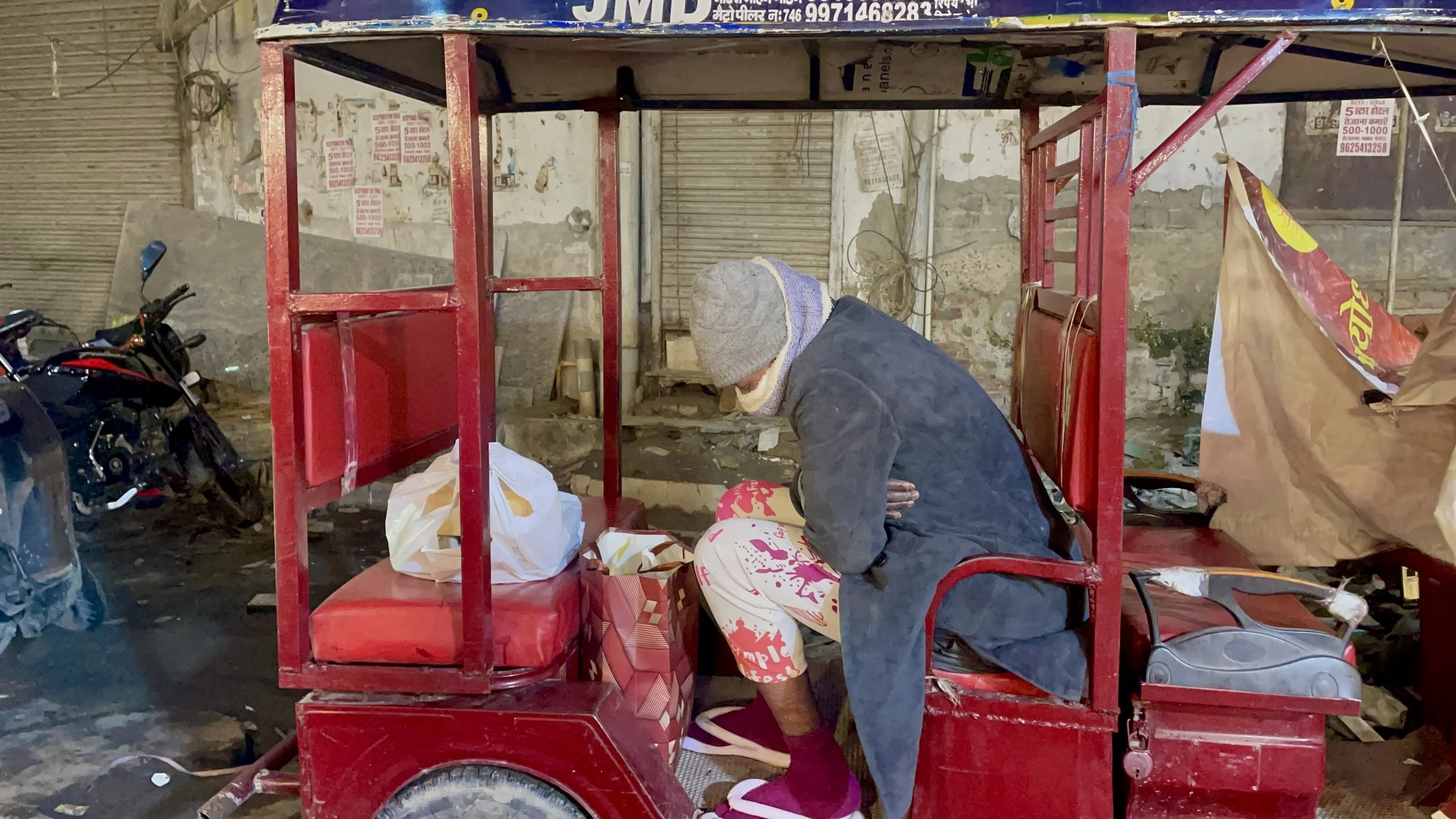
Jasmine on the day she filed a police report against her trafficker, days before she died. Pari Saikia/More to Her Story
More to Her Story contacted the Uganda High Commission in New Delhi for comment on Jasmine’s case but received no answer.
Since 2023, More to Her Story documented more than 30 cases of women trafficked from Uganda, Kenya, and Tanzania to India for commercial sexual exploitation.
Nirmala B. Walter, founder of the anti-trafficking organization Manobal, told More to Her Story that since 2022, at least 100 African women had contacted her organization for help.
“When Manobal requested their documents, passports, and identification cards, only 32 women could present them. Others had either expired visas or their passports were still held by traffickers,” said Walter.
In 2024, Maria*, 27, was a college student in Kenya pursuing medicine.
That April, her plans unraveled when two self-described “education consultants” contacted her with an offer of a fully funded scholarship to Chaitanya University in Hyderabad. They sent her “signed documents on the college letterhead” via WhatsApp to appear legitimate. Maria accepted the offer, collected her student visa from the Indian Embassy and took a flight to India on May 11th, 2024.
“That is how I was deceived and trafficked to India on a student visa. Soon, under the pretext of ‘online educational work’, they downloaded some nudes of a woman who looked identical to me, created accounts in my name on dating apps, posted these images and marketed me to Indian males in the Kondapur area,” said Maria.
More to Her Story contacted Chaitanya University to verify the documents but received no response.
Annie*, 34, was trafficked from Tanzania’s Chalinze district in January 2018 on what was described as a “medical attendant visa” by two traffickers who operated a prostitution ring in New Delhi. Today, Annie lives in a shelter in Delhi with her six-year-old son, born in India in 2024, as she awaits a decision from the Foreigners Regional Registration Office. She hopes the authorities will waive her overstaying fines and grant them an exit permit to return to Tanzania.
“I want to request the government of India to please help my son and me,” Annie said. “Please send us home. What is our fault here?”
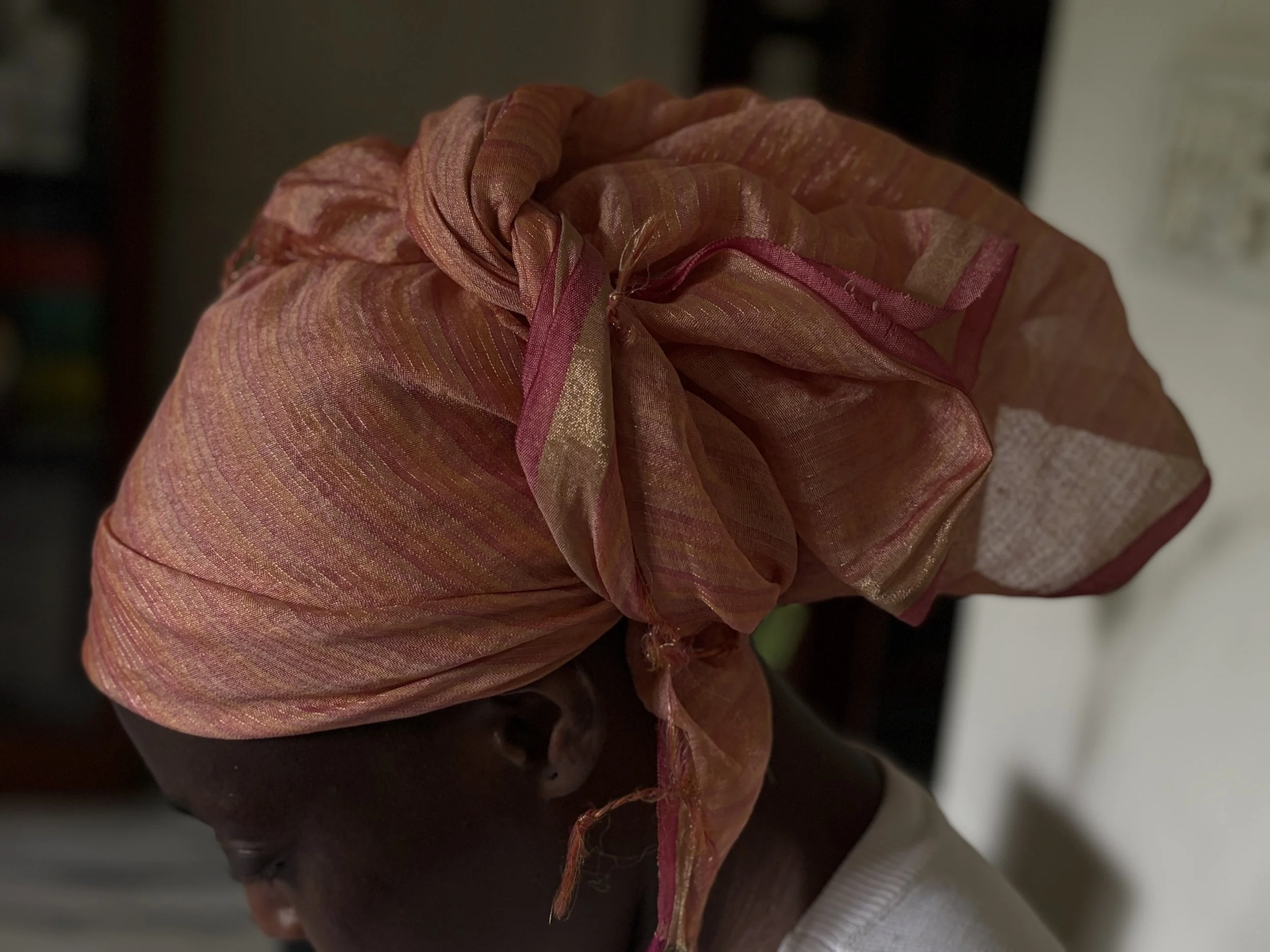
Annie in a shelter in New Delhi. Pari Saikia/More to Her Story
Chrysolyte Sanamanda, Executive Director of Hyderabad-based NGO Red Rope Movement, said that most women are trafficked under the pretext of jobs in supermarkets, salons, or kitchens, often entering on business or tourist e-visas.
“In some cases, however, victims have also been trafficked using [educational] scholarships, medical, or medical attendant visas,” Sanamanda told More to Her Story. “African women on the streets, especially when engaging with Indian men, face extreme violence, including gang rape, punching with screw driver on thighs, road rage, verbal abuse, and persistent catcalling. Alarmingly, even children have been seen catcalling them in broad daylight.”
Most of the women interviewed said they were forced to work in places known as “kitchens”—a coded term for underground sex clubs. Violet*, a 28-year-old Kenyan woman in Delhi, said these venues are allegedly run by “cult groups,” referring to confraternities operating in India. Confraternities are clandestine organizations linked to Nigerian student groups that rose to prominence in the 1980s, often associated with violence and organized crime.
Most “kitchen” owners are reportedly affiliated with the All India Nigerian Students and Community Association (AINSCA), alongside nationals from Uganda, Kenya, and other East African countries. There is no official data on how many underground kitchens operate in Delhi. Some victims said these kitchens provide synthetic drugs like MDMA and cocaine, alongside commercial sexual services. In 2025, the Delhi Police’s Crime Branch busted several illicit drugs syndicates, involving both Nigerian and Indian dealers.
East African community leaders in New Delhi reject allegations that Nigerians disproportionately run these operations, calling them an unfair generalization. They say nationals from Uganda, Kenya and Tanzania are also implicated in human and drug trafficking. Larry Chigbata, president of AINSCA and acting chairman of the African Union India, said Nigerians — the largest African community in Delhi — are often stereotyped because of past criminal cases, despite the group enforcing strict internal rules.
Against this backdrop, the consequences for trafficked women are brutal.
Sarah*, 26, from Uganda, survived an acid attack in Delhi in 2022.
One night, after three clients refused to use condoms, she said she went to her boss for help. Instead, he sent her to the streets of Lajpat Nagar to solicit other clients. Later that night, she said, a group of men picked her up in a car, assaulted her and poured a burning substance on her body before leaving her on the roadside.
“It was acid when the doctor checked. I don’t want to die in India,” Sarah said, pointing to the deep, permanent scars on her body.
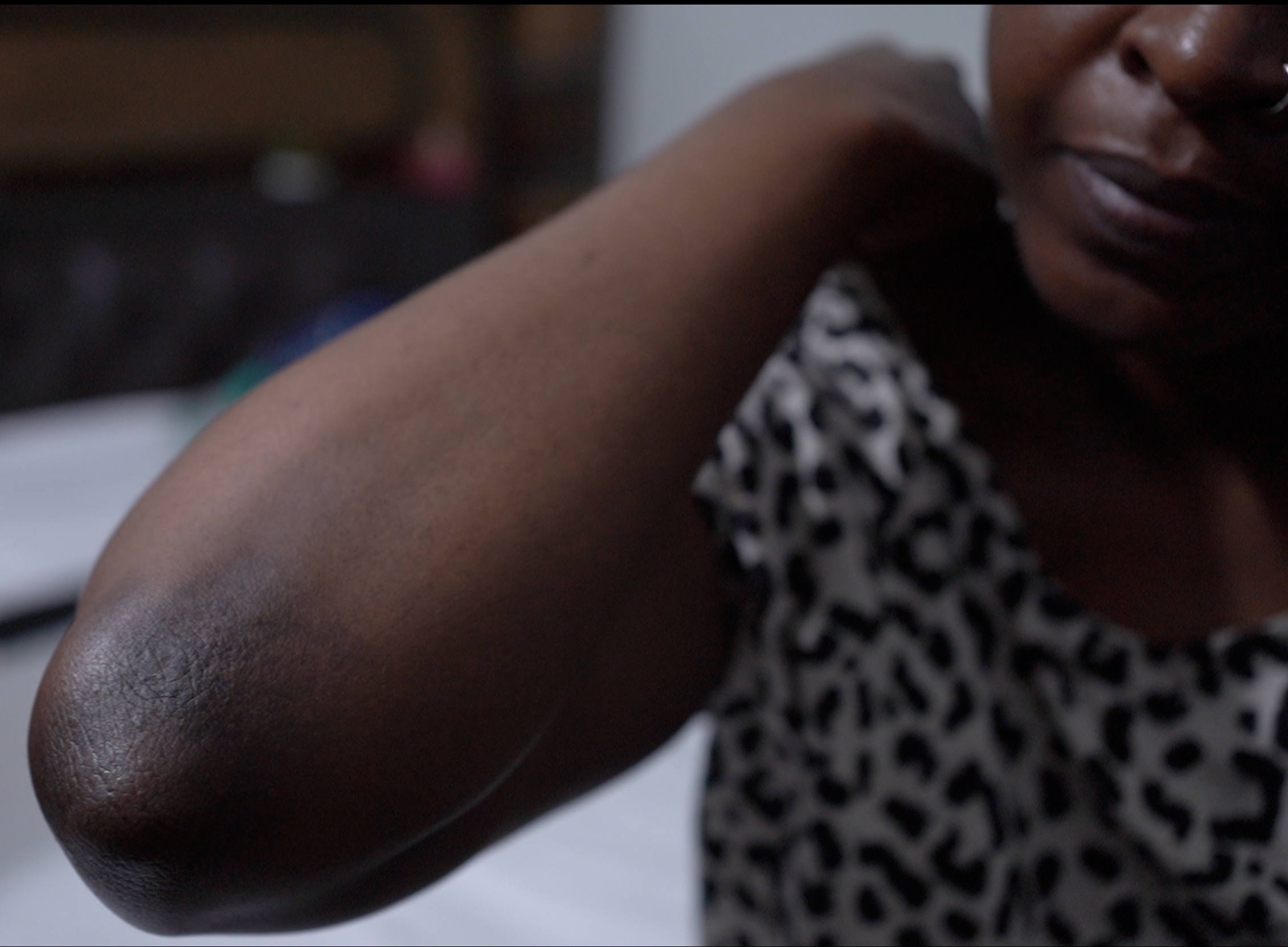
Sarah shows the bruise left by the beating. Pari Saikia/More to Her Story
Sarah had been trafficked to India in March 2019 on a business visa by Ugandan and Nigerian traffickers who promised her work as a hairstylist or maid, with a monthly salary of 30,000 to 50,000 rupees.
Her parents took out a $100 loan to pay what traffickers described as a mandatory service fee. In Uganda, where 42 percent of the population lives below the international poverty line of $2.15 a day, the loan represented a significant financial burden for the family.
“The $100 debt would not have hurt today if I had the job the agents promised,” Sarah told More to Her Story. “Instead, I was trafficked into the streets and the bars—‘kitchens’—of Delhi for commercial sexual exploitation, where I nearly died.”
Prince Makuka, an Ugandan national and Vice Chairman of AINSCA raised alarm about the rising hate crimes against African women in Delhi and the surrounding regions. “So many of our sisters [African women] have been raped and murdered for their ethnicity,” Mr. Makuka told More to Her Story.
Annette Kirabira, Executive Director of Rahab Uganda, an NGO supporting trafficking victims in Uganda, said that women from “broken families” or “failed romantic relationships” are prime targets of human traffickers.
“When trust is broken in relationships and women are left isolated, they become more vulnerable to trafficking — especially single mothers,” said Kirabira. “The risk is compounded by a lack of education, skills, job opportunities, financial resources and social support. It is further heightened when families are unwilling or unable to support them, or when women lack the means to support themselves independently.”
Victims of sex trafficking in India told More to Her Story that they are desperate to return home. Several said traffickers abandon them once they are diagnosed with illnesses — including H.I.V./AIDS, liver disease, urinary tract infections and other sexually transmitted infections — or continue to exploit them until they are deemed “unfit for sex work.”
Some said they were held until they paid a “release fee” ranging from 200,000 to 500,000 rupees (about $2,400 to $6,000 USD). Women living with HIV/AIDS and other health issues feared they may never reunite with their families again, or “die alone” in India due to the apathy from both their home countries and Indian government. Many have repeatedly sought help from their Embassies, the Ministry of External Affairs in India and the Delhi Police without success.
“Instead, every victim is expected to arrange flight tickets and pay a penalty of 50,000 rupees (about $540) for overstaying in India beyond 90 days, even though they are victims of sex trafficking, not illegal migrants,” Walter said.
In September 2025, India announced a six-month amnesty program, running from Sept. 1, 2025, to Feb. 28, 2026, granting expedited exit permits to Ugandan and Kenyan nationals who had overstayed their visas and exempting them from financial penalties. Tanzanian nationals, however, were not included, leaving their legal status and prospects for return unresolved.
However, many victims remain trapped in legal limbo across India, paralyzed by the fear of detention, legal action or retaliation from their employers.
There is no publicly available data on African nationals or trafficking victims living in India. A report by Global Bilateral Migration, last updated in 2021, estimated that about 51,000 African migrants lived in India between 1960 and 2000. Right to Information (RTI) requests—a legal mechanism that allows citizens to seek information from public authorities—were filed seeking such data, including figures on undocumented foreign nationals, rescued victims, and H.I.V./AIDS patients, but multiple Indian government bodies, including key ministries, agencies, and embassies in India and East Africa, did not respond.
Utkarsh Singh, a New Delhi–based human rights advocate who represented the Manobal NGO in Jasmine’s case, said she was “one of countless African victims stranded in India without an exit permit,” and that penalizing trafficking victims to leave should prompt “serious introspection” by Indian authorities. The process, he said, should facilitate safe repatriation, not worsen their victimization.
In February 2025, Jasmine’s body was returned to Uganda. Around the same time, her child was located after the Manobal NGO filed a habeas corpus petition in the Delhi High Court. Her alleged trafficker faces no charges.
In March 2025, Jasmine’s child was returned to his relatives in Uganda, without his mother.
“I believe one day I will be able to go back home with my baby,” Jasmine said in an interview before her death.
*Names changed to protect identities.