

“They Took My Freedom, My Home, My Child”: Christian Women Jailed Under India’s Anti-Conversion Laws
UTTAR PRADESH, INDIA — Rinky was one month pregnant when the jail gates closed behind her.
It was late at night on March 25, 2025, when police took her from the station to the district Baurumau. Hours earlier, she had been praying inside a small church in Baurumau, on the outskirts of Lucknow, Uttar Pradesh, when a mob gathered outside. By evening, the church gates were locked, slogans echoed through the compound, and men holding mobile phones filmed everything.
Inside the jail, Rinky, 29, was placed alone in a cell. She had no blanket, no medicine, and no way of knowing what was happening to her husband, who had been beaten by the crowd before police intervened. No one told her how long she would be there—or that the stress, hunger, and forced labor would cost her unborn child.
Rinky is one of hundreds of Christians arrested under anti-conversion laws in India, Uttar Pradesh, a state that has become the epicenter of religious persecution in India. For women, the harm often continues long after release.
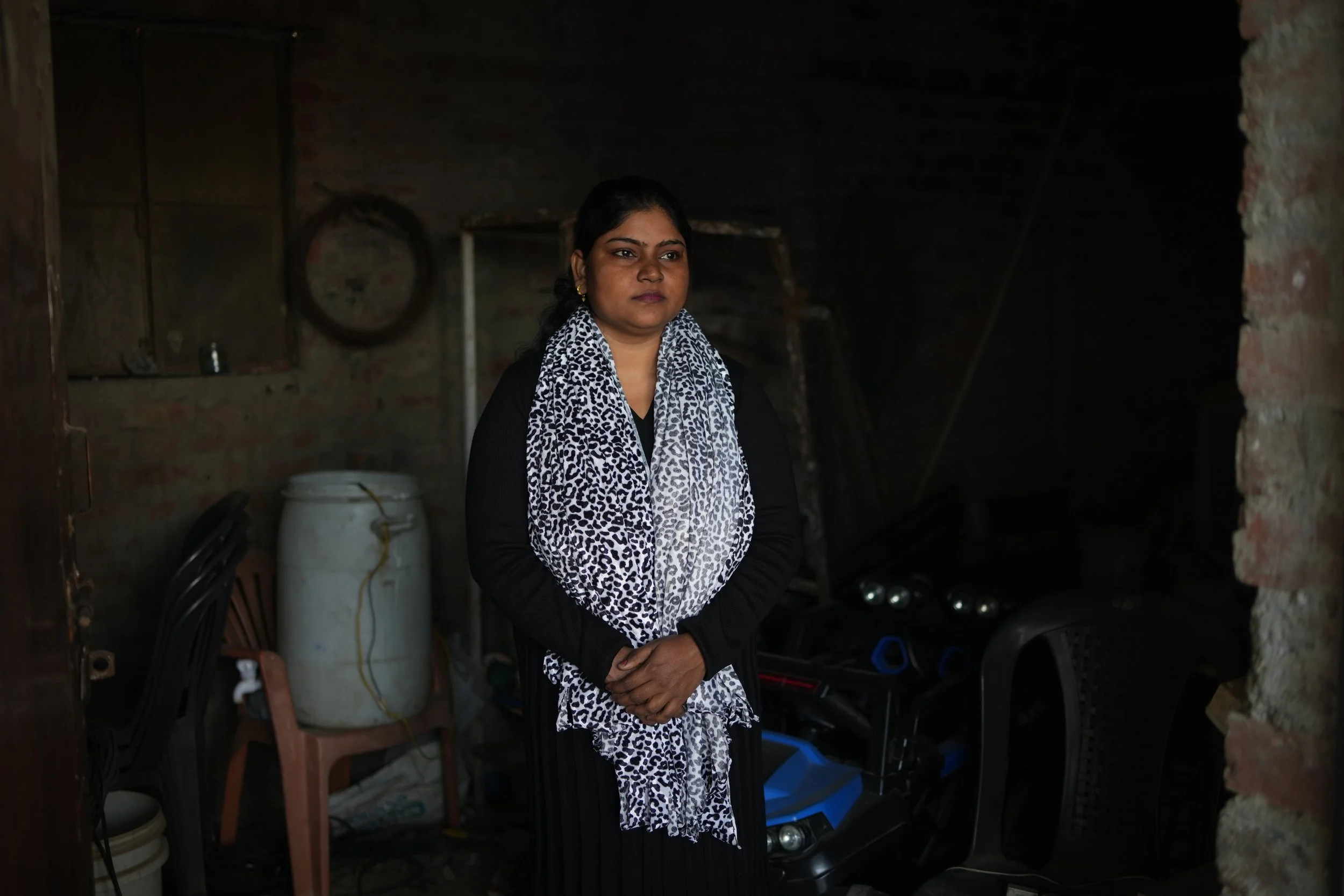
Rinky stands inside a room in her home where her belongings were broken and destroyed by a mob, with some items taken away to another house. She and her family were not allowed to return and were forced to move to a distant village, where they now live as strangers. Wednesday, January 21, 2026. (Photo/Suhail Bhat)
In India, a country of nearly 1.5 billion people, Hindus remain the overwhelming majority, at about 80 percent of the population, while Muslims account for roughly 14 percent and Christians just over 2 percent. According to data compiled by the New Delhi–based Citizens for Justice and Peace, violence against Christians rose from 139 incidents in 2014 to 834 in 2024. Between 2014 and 2024, nearly 5,000 incidents were documented nationwide.
In Uttar Pradesh alone, over 800 Christians were jailed in recent years, many without trial or bail, with 155 cases registered under anti-conversion laws. During the same period, only 45 FIRs were filed against members of attacking mobs. Between January and September 2024, nearly 600 church services were attacked or disrupted in Utter Pradesh.
Uttar Pradesh and Chhattisgarh account for nearly half of all attacks on Christians nationwide.
“These are not isolated incidents,” said Dr. Michael Williams, National President of The United Christian Forum for Human Rights (UCFHR). “This is a systemic pattern of criminalization.”
“They Treated Me Like a Disease”
In jail, Rinky was placed under enforced silence. Authorities warned that any inmate who spoke to her would be fined five hundred rupees and sent to a month of hard labor. The threat worked. Other women avoided her. She ate and slept alone.
“They treated me like a disease,” she told More to Her Story.
Despite being pregnant, Rinky was assigned punishing physical labor: cleaning toilets, washing bathrooms, carrying heavy loads. Food was scarce. Water was rationed.
Her two children were allowed to visit only once. “They clung to my clothes and cried,” she said. “They kept pulling me, saying, ‘Come home, mama.’”
She promised them she would return, but it was a promise she did not know how to keep.
Rinky’s case was not an exception. Five hundred kilometers from her home in Noida, Seema, 29, was nearing the end of her sixth month in jail after converting to Christianity.
Born into a Hindu family in Chapartala Urva village in Prayagraj district, Seema did not grow up in a household marked by ritual or religious observance. “I was always searching for an answer,” she said. “I kept asking myself who the true God was.”
Over time, she said, she found that answer in Christianity.
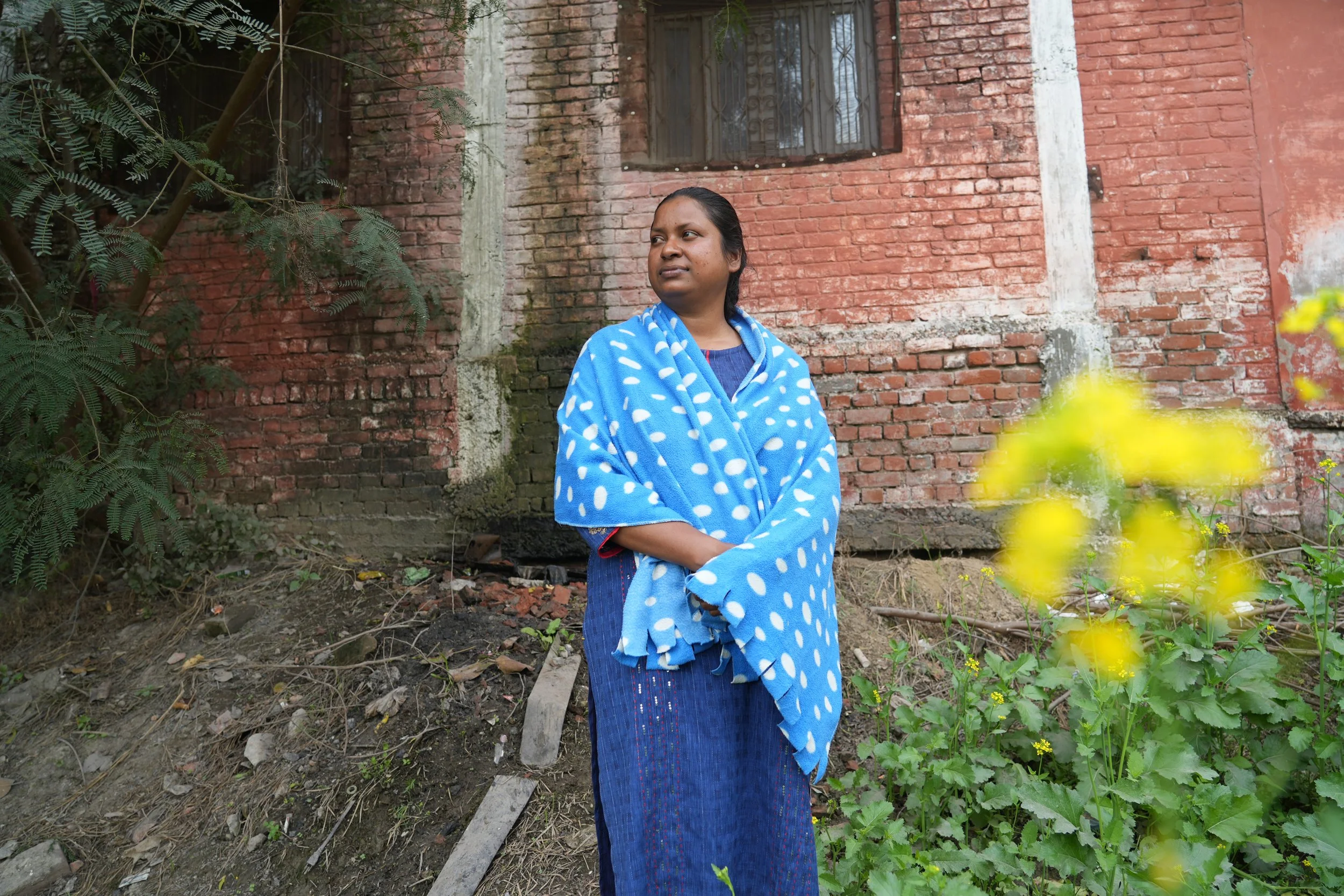
Seema, 29, began believing in Christianity at the age of ten. During her six months in jail, she was assigned physically demanding labour, endured extreme heat, sleepless nights, and delayed medical care. She says it was only in jail that she understood the meaning of freedom and remains devoted to her faith. Saturday, January 24, 2026. (Photo/Suhail Bhat)
In 2020, during the COVID-19 lockdown, Seema was arrested. Her alleged crime was distributing food to people who were hungry. Police accused her of forceful conversion, making her one of the first people booked under Uttar Pradesh’s newly introduced anti-conversion ordinance.
When police detained her, Seema was menstruating. She asked for sanitary pads, but the officer refused. “I used tissue paper,” Seema said. “That moment broke me.”
Seema spent six months in jail without seeing her family. Food and water were inadequate. Medicines were often delayed. Despite having no prior experience of manual labour, she was assigned physically demanding work that left her body aching. “My whole body was in pain,” she told More to Her Story.
The heat inside the barracks was suffocating. Fans barely worked. Mosquitoes bit through the night, making sleep nearly impossible. “Even when people fell sick, medicines came after days,” she said.
After her release, the punishment followed Seema home. Neighbors stopped speaking to the family. People told her no one would marry her because she had been to jail. At one point, Seema tried to end her life.
“I survived,” she said. “But something inside me died.”
Children Visiting Mothers Behind Bars
In Prayagraj’s Chapartala village, Sangeeta Rahi, 38, still remembers the sound of her children crying in the jail corridors. “That sound doesn’t leave you,” she said. “It stays in your body.”
Sangeeta has followed the Christian faith since 2015, drawn to it by questions that refused to fade about creation, truth, and meaning. When she began reading the Bible, often traveling to the city to attend church, something shifted. “My faith was not forced or bought,” she said. “It came from years of searching and prayer.”
On the morning of October 24, 2025, Sangeeta’s life changed abruptly. Police arrived at her home and arrested her and her husband without warning. “We were not even allowed to change our clothes,” she said. “They treated us like criminals.”
For three days, the couple was held in a small police station in a nearby area. The lock-up was filthy, foul-smelling and suffocating. “I could barely breathe,” she recalled.
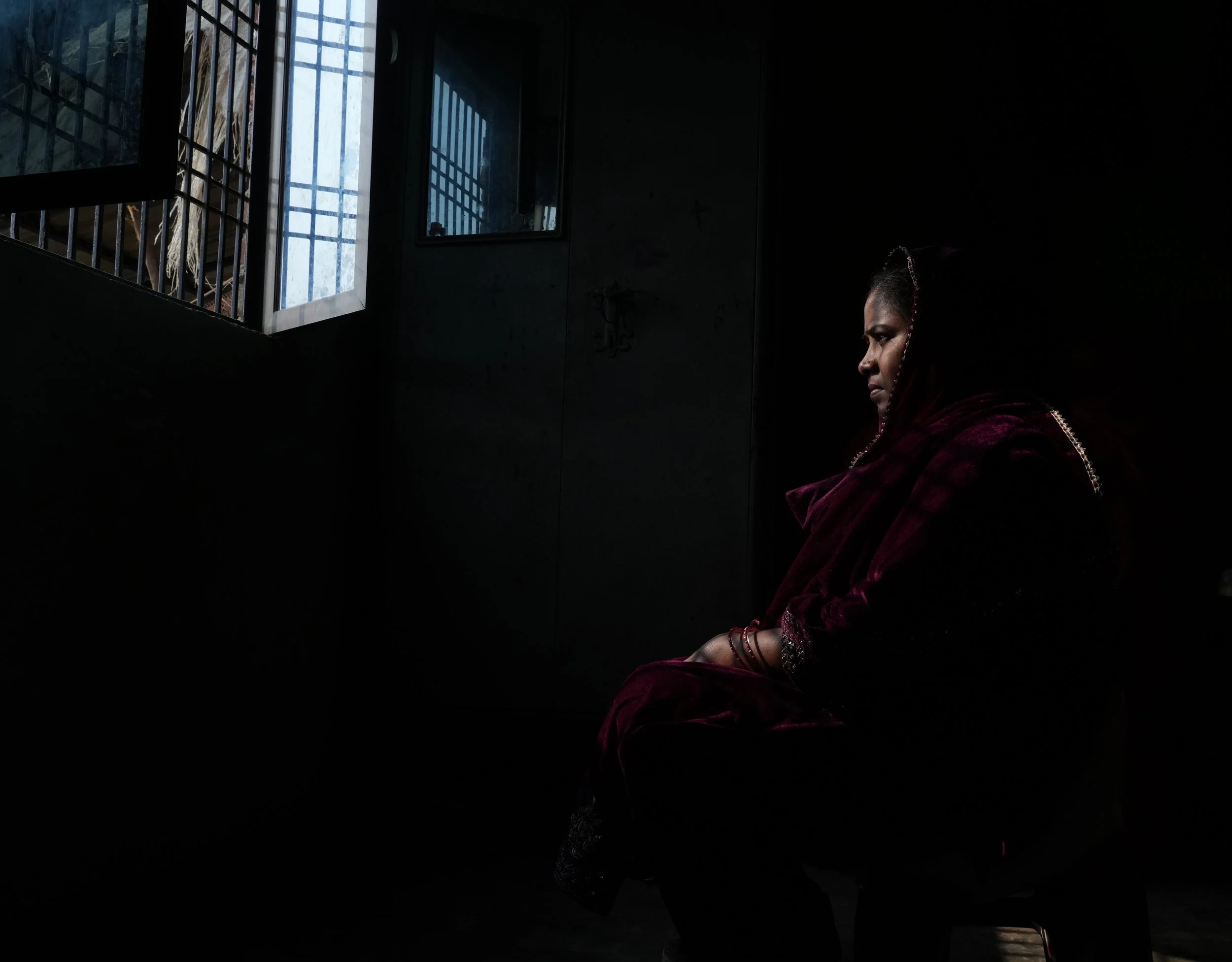
Summeta, 31, from a small village in Kunda, Pratapgarh district, Uttar Pradesh, sold all her jewelry and household belongings to try to secure the release of her husband from jail. Her husband was arrested in 2025 under the anti-conversion law and has remained in jail for over two months. With no income left, her children went hungry for days, and neighbors stopped speaking to the family following the arrest. She has been left to manage her children and the legal battle alone, describing the period as one of the most difficult moments of her life. Despite the hardship, she continues to place her faith in Jesus Christ, believing it will help her endure the crisis. Friday, January 23, 2026 (Photo/Suhail Bhat)
After that, Sangeeta was sent to the district jail, where she spent 47 days. The charges against her were based on allegations from villagers who claimed she had forced people to convert and offered money—claims she denies.
Inside the jail, Sangeeta often fasted and prayed. “I kept asking God to take me back to my children,” she said. But outside, the legal battle dragged on. Court hearings required long journeys and legal fees. “Every court date feels like another punishment,” Sangeeta said.
Living in Uttar Pradesh as a religious minority, she said, had become terrifying. “It feels like only one religion is allowed now, and the rest of us are treated like criminals.”
Violence With Impunity
According to Paul*, a lawyer in Uttar Pradesh who represents dozens of Christians accused under anti-conversion laws and requested anonymity for his safety, the problem often begins with the police.
“In almost every charge sheet, there are no independent witnesses,” he told More to Her Story. In many cases, he added, even government-appointed prosecutors show little willingness to cooperate.
Under such conditions, mounting a legal defense becomes difficult. “The entire process feels prejudiced from the start,” Paul said. “Faith has been turned into something you must constantly justify.”
Dr. Williams, of the United Christian Forum for Human Rights, said a culture of impunity enables violence against minority groups to persist. “Earlier, mobs acted at night. Now they act openly, with police watching,” he said. “In many cases, perpetrators walk free, while victims end up in jail.”
After her release, Rinky returned to find her home destroyed. A mob had looted her belongings. She was not allowed to return, and her family was forced to flee to a neighboring village.
“My unborn child is gone,” she said. “And no one is accountable.”
Today, Rinky still prays. She knows people whisper about her jail time. She knows society has judged her worth, her motherhood, her faith. Yet she stands by it.
“They took my freedom, my home, my child,” she said. “But they could not take my faith. It is the only thing they could not imprison.”