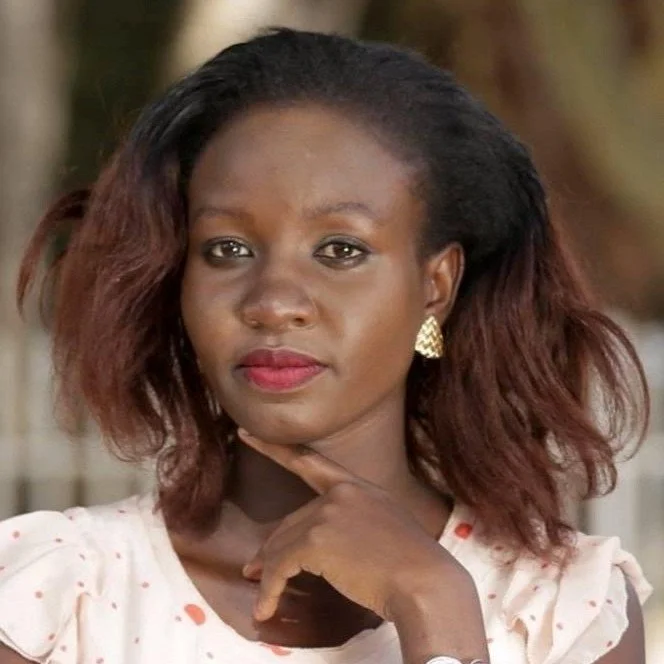

She Was Cut at Seven. Now She’s Fighting to End FGM.
Dahabo Guracha Damballa, 29, was sitting in a high school classroom far from her village in northern Kenya when the discussion turned to female genital mutilation.
Some of her classmates looked confused. Others had never heard of it. Dahabo could not understand why. In the community where she grew up, FGM was so common that she had assumed it was a near-universal part of girlhood.
The seventh of 13 siblings, Dahabo grew up in Sololo, a dusty town near the Ethiopian border. At seven, during a school holiday, she was taken along with four other girls to be cut.
“I thought every girl had to go through it,” she told More to Her Story.
For decades, FGM has shaped the lives of girls across northern Kenya. Although prevalence has fallen sharply nationwide, rates remain high in Marsabit County, where Sololo is located. There, 83 percent of women ages 15 to 49 have undergone FGM, according to the 2022 Kenya Demographic and Health Survey.
For years, Dahabo never questioned what had happened. In Sololo, conversations about FGM rarely touched on rights or health. The reality was embedded in community life, often framed as a “necessary step” toward womanhood. Girls underwent the cut. Families celebrated. Life continued.
“No one explained anything to us,” Dahabo said. “You just knew it was something you were expected to do.”
It was only after she left home for high school that Dahabo encountered a different view. Listening to classmates speak about FGM as something unfamiliar felt almost surreal. "I remember wondering how they didn't know about it. Then I started wondering why I knew about it so well."
The questions stayed with her. They led her to research FGM, speak with other young women, and learn about its consequences, a process that unsettled many of the beliefs she'd been raised with.
Years later, that process of unlearning eventually led her to the Survivor Leadership Initiative (SLI), a Kenyan network of survivors who lead a training program built around survivor-centered leadership, the idea that people who have lived through the practice are best placed to lead the movement against it. The training gave her something the classroom hadn't: a framework for turning her own story into something she could take to a room full of strangers and use for good.
Globally, more than 230 million girls and women alive today have undergone FGM, according to UNICEF. Kenya has made progress reducing prevalence nationally, but the practice remains deeply entrenched in parts of the north, where it is closely tied to social acceptance and marriage.
For many girls, FGM rarely arrives alone; it arrives with child marriage and the end of their education. That is one reason Dahabo began speaking out publicly.
Today, she uses spoken-word poetry, social media, school visits and community forums to talk about topics many people once avoided discussing at all, sometimes to classrooms full of girls who remind her of herself, other times to parents, religious leaders and elders.
“I chose poetry because I have always believed that sometimes a story can reach where a report cannot,” she said.
Where people resist a subject in a formal conversation, Dahabo has found they listen differently when it arrives as poetry, music or storytelling. Her verses on FGM, gender-based violence, women’s rights, girls’ education and the dignity of women whose voices go unheard draw from what she has witnessed, survived and from conversations with the women and girls she works with.
Dahabo’s advocacy is both online and offline. Social media extends her reach, but she treats the groundwork, the forums, the training, the women’s spaces, and the youth engagements as where the real work happens. She says her on-the-ground engagement reaches more than 5,000 people each school term, a scale that has made her one of the more visible young voices on FGM in the region.
“If we are serious about changing communities, we cannot do all our advocacy from behind a screen,” she said.
Education, she says, changed the course of her life. Had she stayed home, she doesn’t know if she would ever have questioned what happened to her. Her community's response to her advocacy has been mixed, which she says isn't surprising, since she is challenging something treated as normal for generations. Some people support what she does. Others are curious or unconvinced. What has stayed with her is that people can listen even when they disagree at first.
"I am not advocating from a place of hatred for my community," she said. "I am advocating because I care about it."
She describes herself as standing between two worlds, rooted in her culture, but willing to ask hard questions about what needs to change. A girl, she says, can value her culture and respect her elders, and still hold the right to education, bodily autonomy, and a future of her own choosing. She says she's been making this case publicly for years, and it's now - finally - landing. Conversations that used to be uncomfortable are happening more openly, even if change is slow to follow, she says.
The clearest sign of change has come from the highest level of authority within Dahabo’s own community. The Borana, a pastoralist people spread across northern Kenya and southern Ethiopia, are governed through the centuries-old Gada system, a traditional system of governance recognized by UNESCO as an Intangible Cultural Heritage of Humanity. In 2020, the Abba Gada, the community’s highest cultural leader, used the Borana’s supreme assembly, the Gumi Gayo, to formally outlaw female genital mutilation and child marriage. The declaration has not ended either practice, but Dahabo sees it as one of the most consequential turning points in the fight against FGM in the region: a rejection from within the same cultural institutions that have long shaped community life.
That belief is increasingly echoed by people who, elsewhere in the region, once defended the practice. About 300 kilometers away, in neighboring Samburu County, elders are now publicly championing girls' education and rejecting FGM and child marriage.
That shift became formal in late August 2026, when the Samburu Council of Elders Association (SCEA) declared an end to child marriage across the county and directed that every child be enrolled and kept in school, arguing that keeping children out of the classroom has fueled early marriage, FGM and poverty. The declaration came out of a four-day general assembly at Kisima Springs, Samburu Central in northern Kenya, a site the community regards as sacred ground for oath-taking and major pronouncements, where elders from different parts of northern Kenya gathered to address issues facing the region.
SCEA’s patron, retired army colonel Richard Leiyagu, says that too many Samburu children have been left behind educationally, leaving them vulnerable to the practices that cut short their futures. He warned that parents, elders, or anyone else found marrying off an underage girl should face arrest and prosecution, turning a cultural reversal into something closer to internal law enforcement.
"We have seen significant progress. Our efforts have helped rescue hundreds of girls from FGM, and we are seeing more girls remain in school and complete their education."
It marks a notable shift in a region where elders have traditionally been the guardians of social norms, not the ones dismantling them. For years, anti-FGM campaigns targeted women and girls almost exclusively. Increasingly, activists have recognized that lasting change requires reaching the people who actually hold influence in the community.
For Dahabo, the shift offers hope. "Elders hold enormous influence in our communities," she said. "They are custodians of culture, knowledge and values, and people listen to them."
She believes change lands hardest when it comes from inside a community rather than from outside it. "What gives me hope is seeing elders have these conversations in their own communities, in their own language and cultural context," she said.
The shift did not happen overnight. It followed years of work by survivors, local organizations, teachers, religious leaders and community advocates to change attitudes and practices from within. Progress remains uneven, however. In counties such as Marsabit and Samburu, many girls still face pressure to adhere to traditions that have shaped women’s lives for generations.
According to a February report from UNFPA, an estimated 4.5 million girls — many of them under five — are at risk of undergoing FGM in 2026 alone. At the same time, cuts to global funding threaten gains made over decades. UNFPA has warned that without sustained financing, prevention programs and frontline services could be scaled back, pushing the global goal of ending FGM by 2030 further out of reach.
Dahabo said the effects of funding cuts are often felt first at the community level, by survivor-support programs, awareness campaigns and grassroots organizations working directly with girls and families. Those efforts, she said, depend on continuity. FGM and child marriage won’t disappear within a single project cycle; real progress requires consistent engagement over years.
"If we stop investing in prevention, survivor support and community engagement, we risk losing momentum and leaving gaps that harmful practices can fill again," she told More to Her Story.
Dahabo wants funders and policymakers to understand FGM as more than a policy challenge; it’s bound up with culture, poverty, gender norms, family expectations and a sense of belonging. Addressing it, she said, requires sustained investment in survivors and in grassroots organizations that understand those pressures from within the communities they serve.
“We can preserve the values that give us identity while letting go of practices that harm our children,” she said.
It's a modest-sounding claim for what amounts to a profound generational shift. But it is, increasingly, what change looks like in northern Kenya. Not imposed from outside, but argued out, community by community, in the same halls and around the same places where the old rules were once set. The process is gradual, local and often contested, but it is reshaping what a growing number of girls are able to imagine for their lives.