

Displaced in Lebanon, Women Search for Water, Privacy and Dignity
Zahra sits up on a bed made from two wooden pallets, topped with a sponge mattress and white sheets brought from her home in Sour. She tidies her hair, and pulls on her hijab and long abaya. It’s time for her evening walk that always ends at the mosque nearby where she prays and can finally shower.
Zahra, 46, is one of an estimated 620,000 women and girls displaced in Lebanon since the escalation of the conflict in March. For hundreds of thousands of women, displacement has brought particular risks. UN Women estimated that the majority were living outside formal shelters in overcrowded apartments or the street.
For the past three months, Zahra has been living in a tent on Biel waterfront. “At first, we tried to find an apartment, but we were quoted $1,500 a month for rent,” she says. As more than one million people were displaced across Lebanon, housing costs in the capital surged.
Zahra and her husband, Jalal, had already lost their livelihood — a tourism business they ran together in Sour. Unable to afford housing, they joined many other displaced families along Beirut’s waterfront.
In late May, the local municipality erected official blue tents in Biel creating a camp. Residents were told portable toilets and showers would follow, but they never arrived.
“For me, the toilet and showering is the hardest thing. You feel like you are in a desert,” Zahra said.
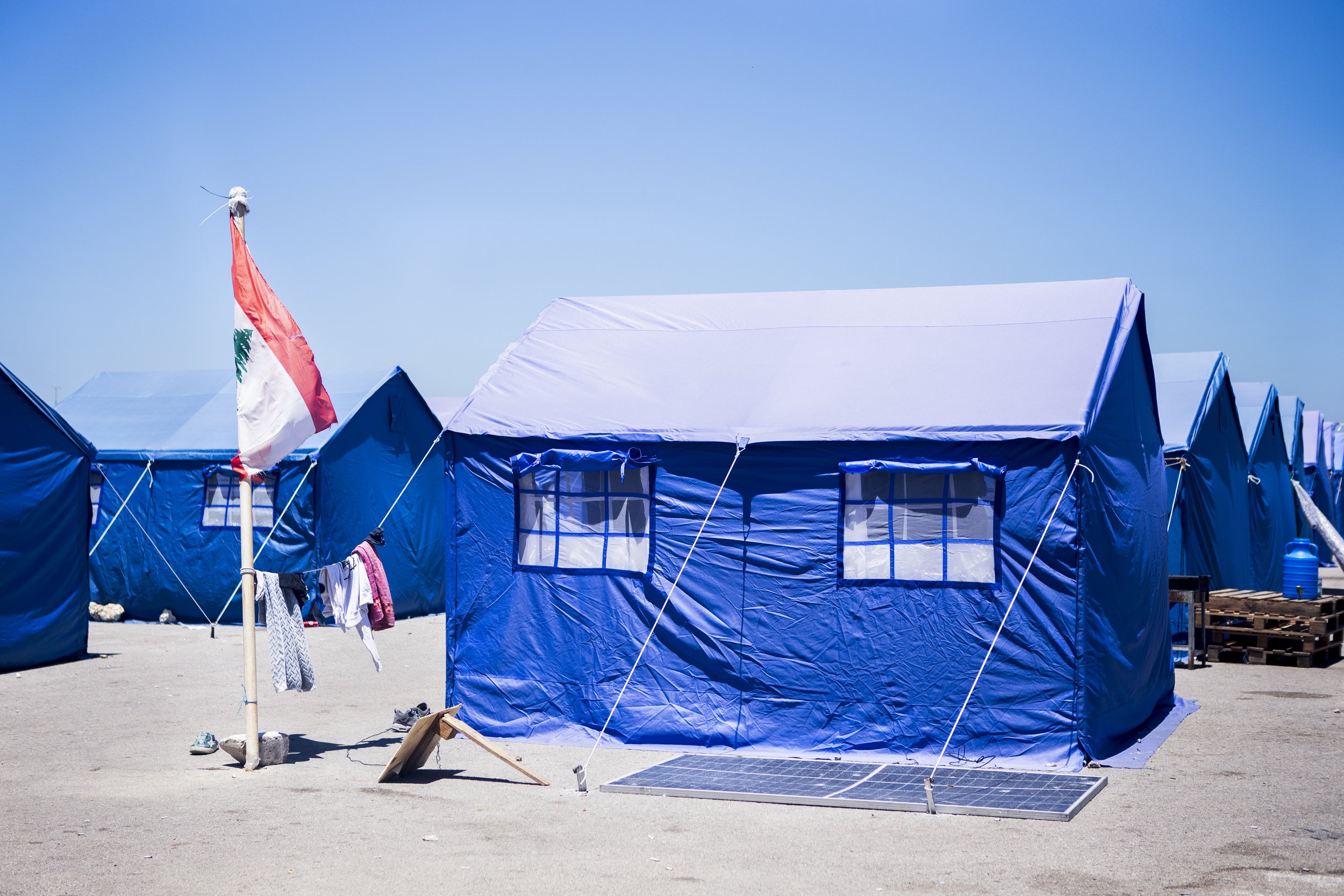
A blue tent in Biel. Rayna Carruthers / More to Her Story
Without running water or electricity, Zahra and her daughter Mariam, a law student at the Lebanese University, struggle with even the most basic tasks, including using the toilet or washing in privacy.
“At first we would go to restaurants, but now they don’t allow us in,” said Samira, who has been living at the waterfront after being displaced from Dahiyeh, Beirut’s southern suburb which has faced repeated strikes since March.
Samira has become a central figure in the camp, regularly cooking for hundreds of residents, collecting donations, and salvaging whatever food she can find.
She sits with her daughter-in-law, Noor, beneath a makeshift gazebo attached to the entrance of her tent, sheltering them from the summer sun. In mid-June, temperatures are reaching 86 degrees Fahrenheit. Since fleeing Dahiyeh, Noor says she has often been overwhelmed by despair. “The only reason I continue is because of my son,” she said.
In the camp, there is no water or electricity, and aid has also begun to dry up. The previous night was especially difficult, when her son woke up hungry and she had nothing to feed him. Around half a million people in Lebanon are now dependent on aid.
For Elissa, displacement carries an added layer of vulnerability. A single mother, her survival feels precarious. “There is no one looking after me but God.”
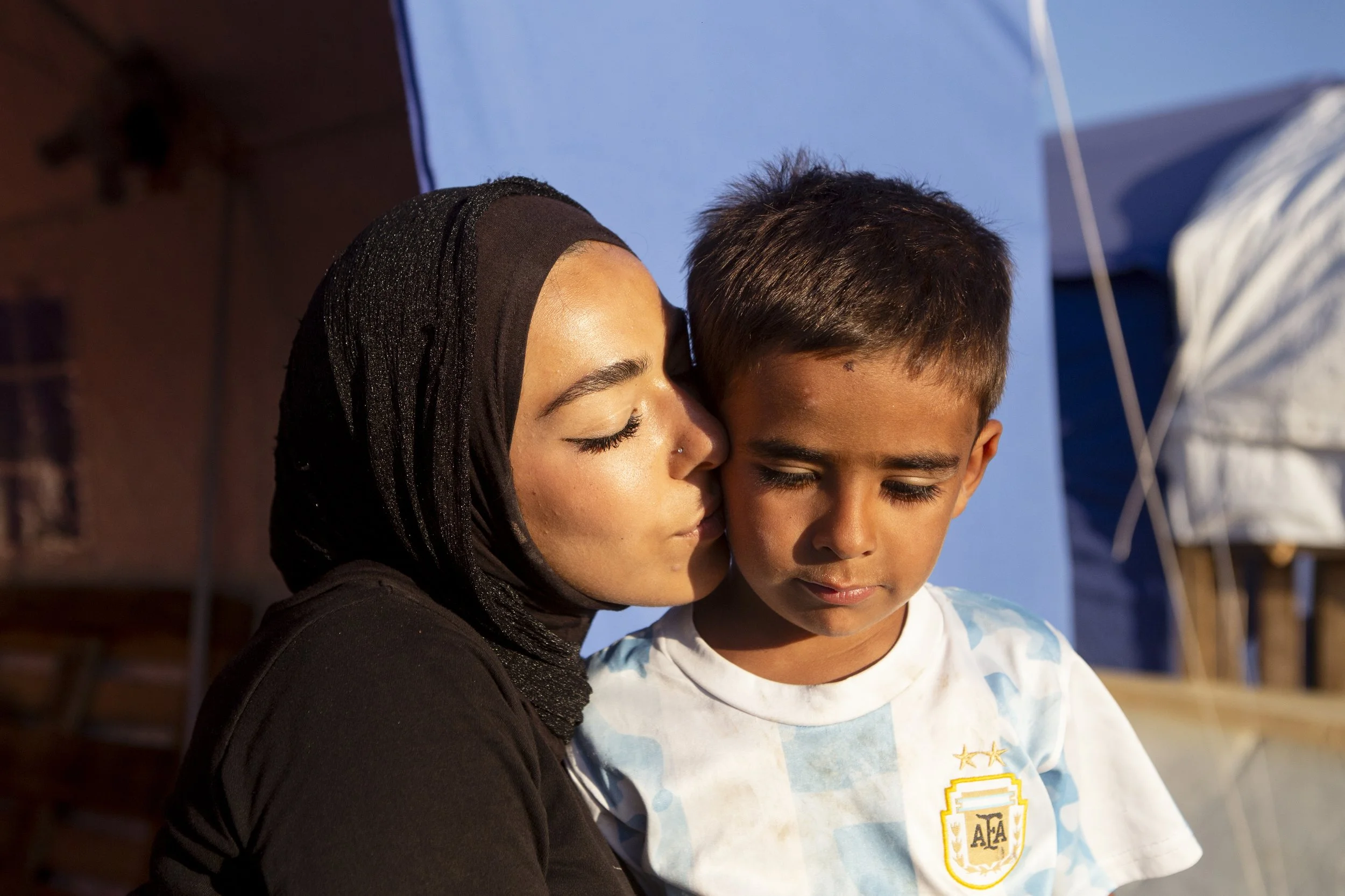
Elissa and her son. Rayna Carruthers / More to Her Story
Being displaced from her home in Dahieyeh has meant losing privacy and safety. “I am wearing a hijab and I’m always terrified someone will come in when I’m unveiled,” she said, recalling a night when a man entered her tent while she was asleep. Only the fabric walls separate her from the street.
Her experience reflects broader concerns raised by the Danish Refugee Council, which says overcrowded formal shelters are leaving women and girls facing heightened protection risks. In many cases, poor partitioning forces women to share cramped spaces with strangers.
But beyond physical insecurity, women in wartime carry an additional emotional burden as caregivers, navigating survival while supporting those around them.
Displacement carries this especially acute burden for Fatme, 37, who is five months pregnant with a baby girl. She was displaced from Sour, where her family home was destroyed.
“It is hard to get appointments for check-ups here in Beirut. Everything needs to be paid for here. Everyone wants money from you which we don’t have.”
According to the Danish Refugee Council, many displaced women cannot afford essential medical care, putting prenatal, delivery and postnatal services out of reach. In some cases, hospitals have withheld identification documents from patients unable to pay, deepening vulnerability.
Even amid her own uncertainty, Fatme has begun caring for her neighbor’s son, who has become sick. “I can’t bear the sound of a child crying in the tent beside me,” she said. “We have to help each other.”
Hanna, an independent trauma counselor based in Beirut, has been visiting camps weekly since March leading trauma workshops. “There is an understood hierarchy of needs and the initial stage is shelter, so it has been hard to get the women to understand that their emotional health is also a pressing need. For many women, immediate survival leaves little room to prioritise emotional wellbeing.”
For younger women, war has upended futures they were only beginning to build. Aya, 24, a nursing student, has been trying to prepare for exams while living in the camp. Displaced for the past month, she says the conditions have made it nearly impossible to focus.“I’m terrified for the exam. I’m not ready at all,” she said, studying as the constant hum of drones echoes over Beirut.
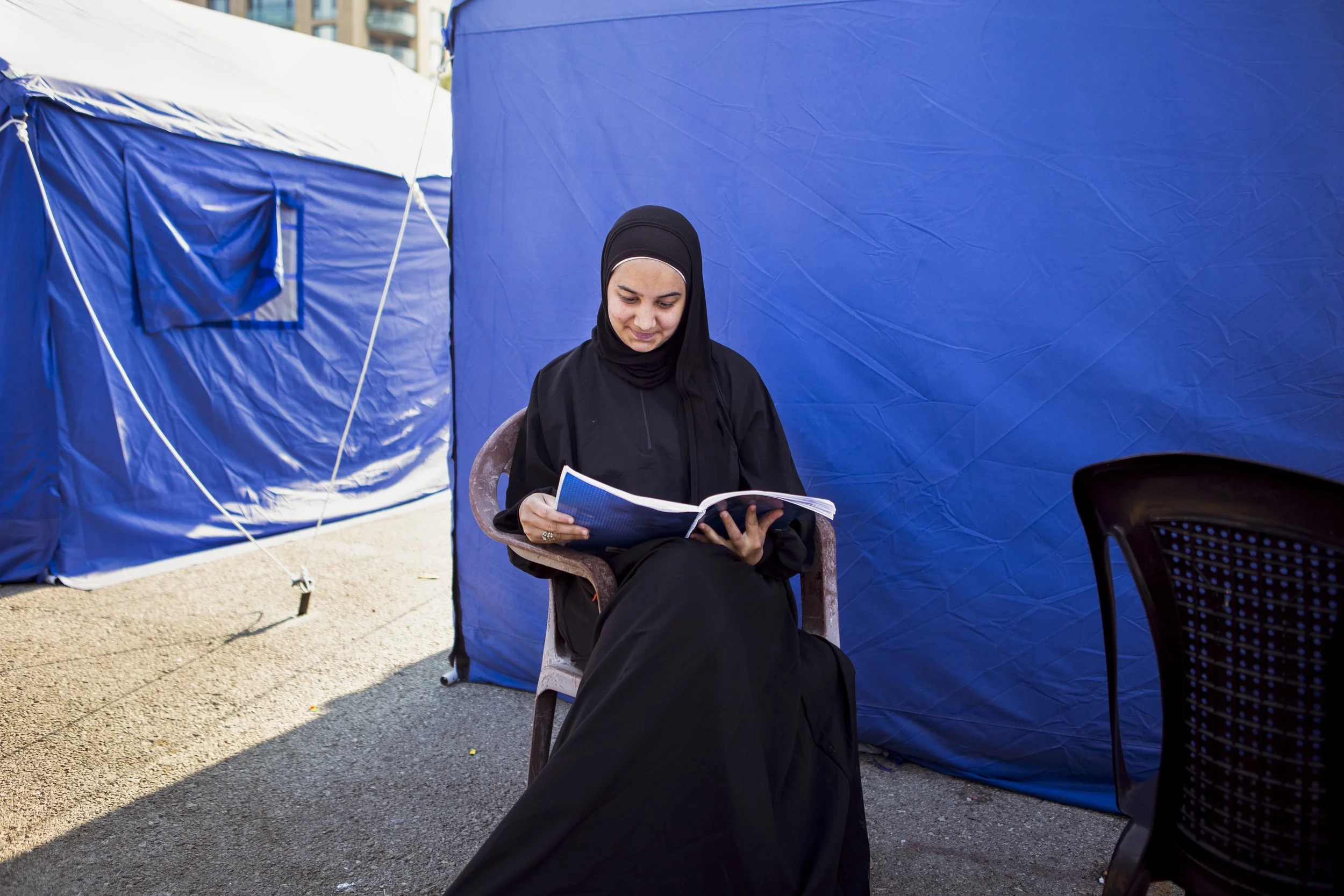
Aya, 24, studies for her nursing exam. Rayna Carruthers / More to Her Story
A ceasefire agreement was announced on June 14 between the United States and Iran, which reportedly included Lebanon. However, Israel has continued to carry out strikes in southern Lebanon, saying it is targeting Hezbollah infrastructure and responding to attacks from the group. As some displaced people begin returning to their villages and homes, an estimated 36,000 houses have been destroyed, leaving many unable to return permanently.
Hanna says repeated ceasefire announcements over the last months have only deepened confusion and anxiety among displaced women. “This actually means more stress. The women are left in limbo. And the women are terrified to go back to their homes. I know a woman who lost her house during a ceasefire so a ceasefire obviously means nothing to her.”
Zahra returns from her evening walk to her tent looking momentarily rested, but the future still weighs heavily on her mind. At the beginning of June, she learned from photographs sent by those documenting the destruction that her home in Sour had been destroyed.
After years of war and months of repeated displacement, she finds herself increasingly believing she may never be able to go back. She returns to a simple dream: “All I want is to live in peace with dignity.”
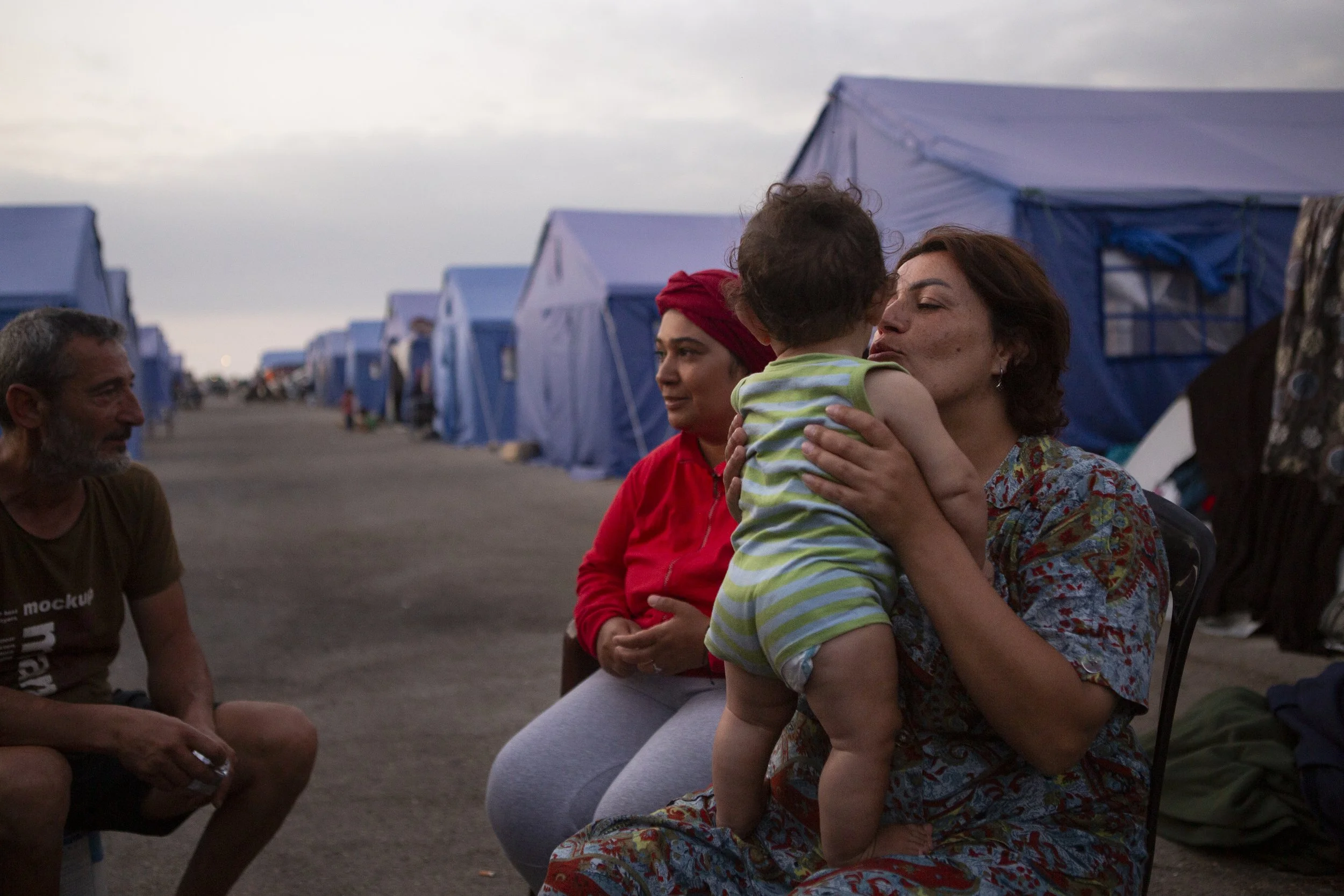
An estimated 620,000 women and girls have been displaced in Lebanon since the conflict escalated in March. Rayna Carruthers / More to Her Story