

A 9-Year-Old Girl’s Killing in Pakistan Brings Women Into the Streets
The rape and killing of a nine-year-old girl in Pakistan’s Swat Valley has sparked a wave of protests, with women, children and elders taking to the streets to demand justice and broader change.
Beyond the individual case, the killing has renewed broader concerns about the safety of women and children in Pakistan, the handling and prosecution of sexual violence cases, and public trust in the justice system.
Eshmal, 9, was a second-grade student at a school for orphaned children. Her uncle, Umar Gulab, described her as bright and hardworking, saying she had done well in her first-grade exams.
On the morning of September 9, Eshmal was preparing to sit for her second-grade English examination. She had spent much of the previous night studying, but woke up late. By the time she was ready, the school van had already left, so she walked to school instead. For her family, it was the last morning they would share with her.
After returning home from school, Eshmal changed into red clothes and, around noon, went to play on a wooden swing at a neighbor’s house. According to police and the account provided by her family, Eshmal was lured inside the house by a man later identified as Sultan Muhammad. Police say he brutally assaulted and shot her.
Shaukat Ali, superintendent of police investigations in Upper Swat, said the post-mortem found “marks of torture” and medical evidence consistent with sexual assault.
Muhammad was arrested and later placed on judicial remand, according to police. His wife was also arrested on allegations that she helped destroy evidence.
Eshmal’s 67-year-old uncle, Umar Gulab, told More to Her Story that her father died by suicide in 2022, leaving behind four daughters and a son. Eshmal’s mother is deaf and mute, he said. Gulab said the family is “struggling to cope and demanding justice.”
But the reaction to Eshmal’s death has extended far beyond her immediate family.
Women from the area have joined protests demanding accountability and change. In parts of Pashtun society, where social and cultural norms have historically limited women’s participation in public life, their presence in the demonstrations is itself significant. The protests reflect a broader fear among residents: that children, particularly girls, may not be safe even in familiar surroundings.
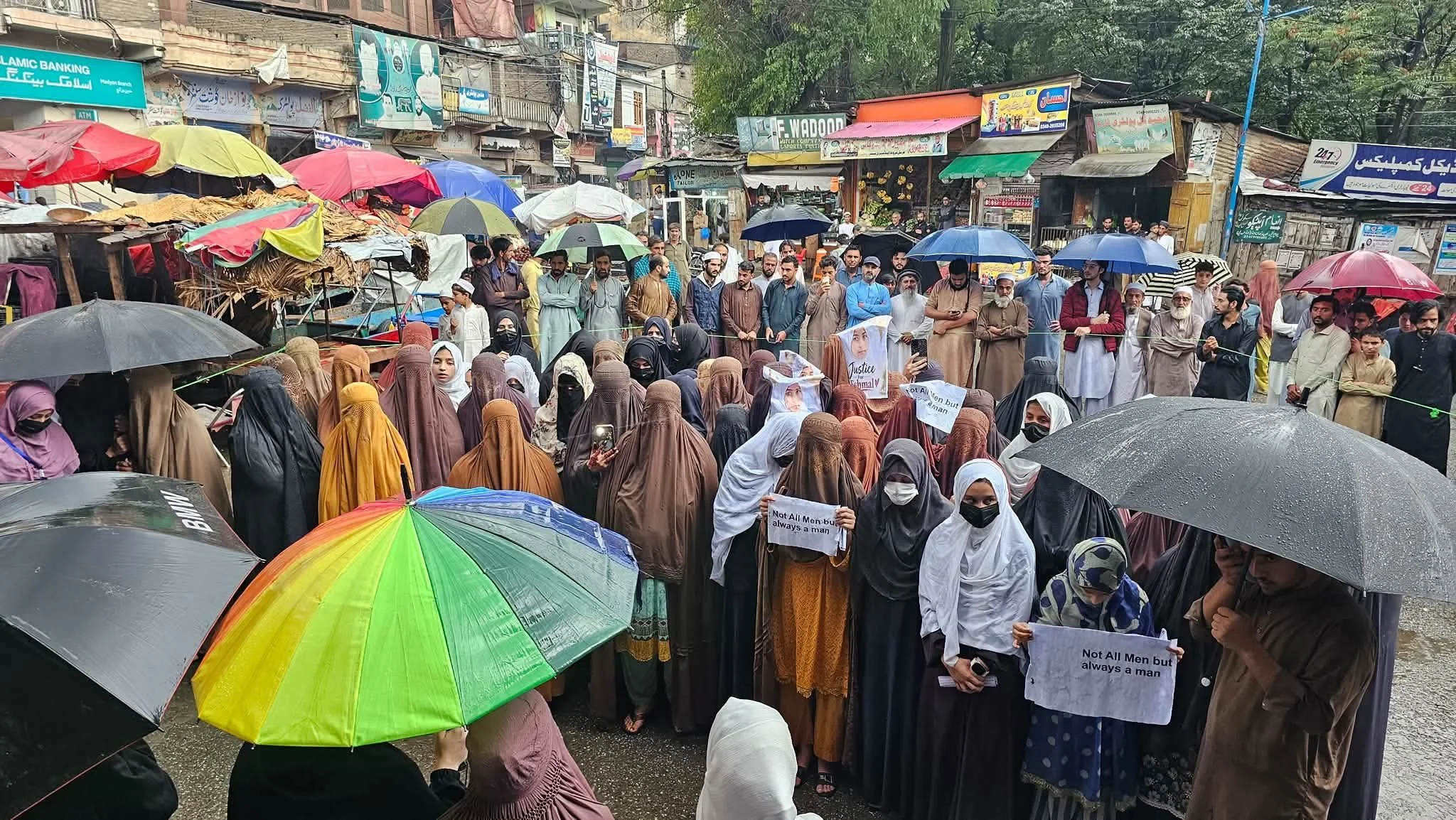
Women protest in Pakistan’s Swat Valley following the killing of a nine-year-old girl.
“Women have taken to the streets for the first time,” Gulab told More to Her Story, adding that social and cultural norms have generally kept women away from public protests.
Kulsoom, 23, who participated in one of the protests, told More to Her Story that the demonstrations are not only about Eshmal.
“Our children are no longer safe even in their homes,” she said. “Children are afraid to go to school.”
She said families in the area once treated neighbors’ homes as extensions of their own, but that the incident has eroded that sense of trust.
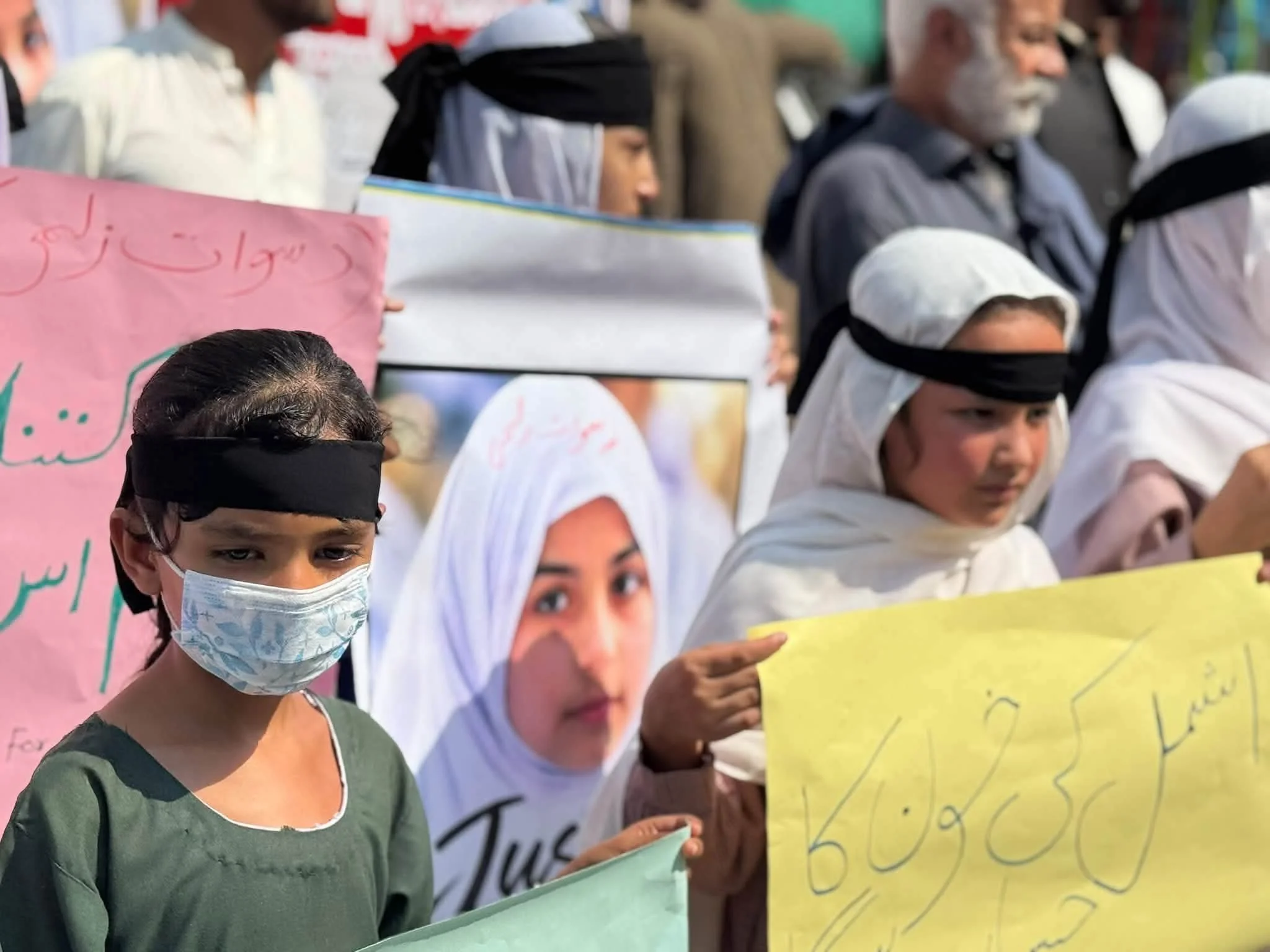
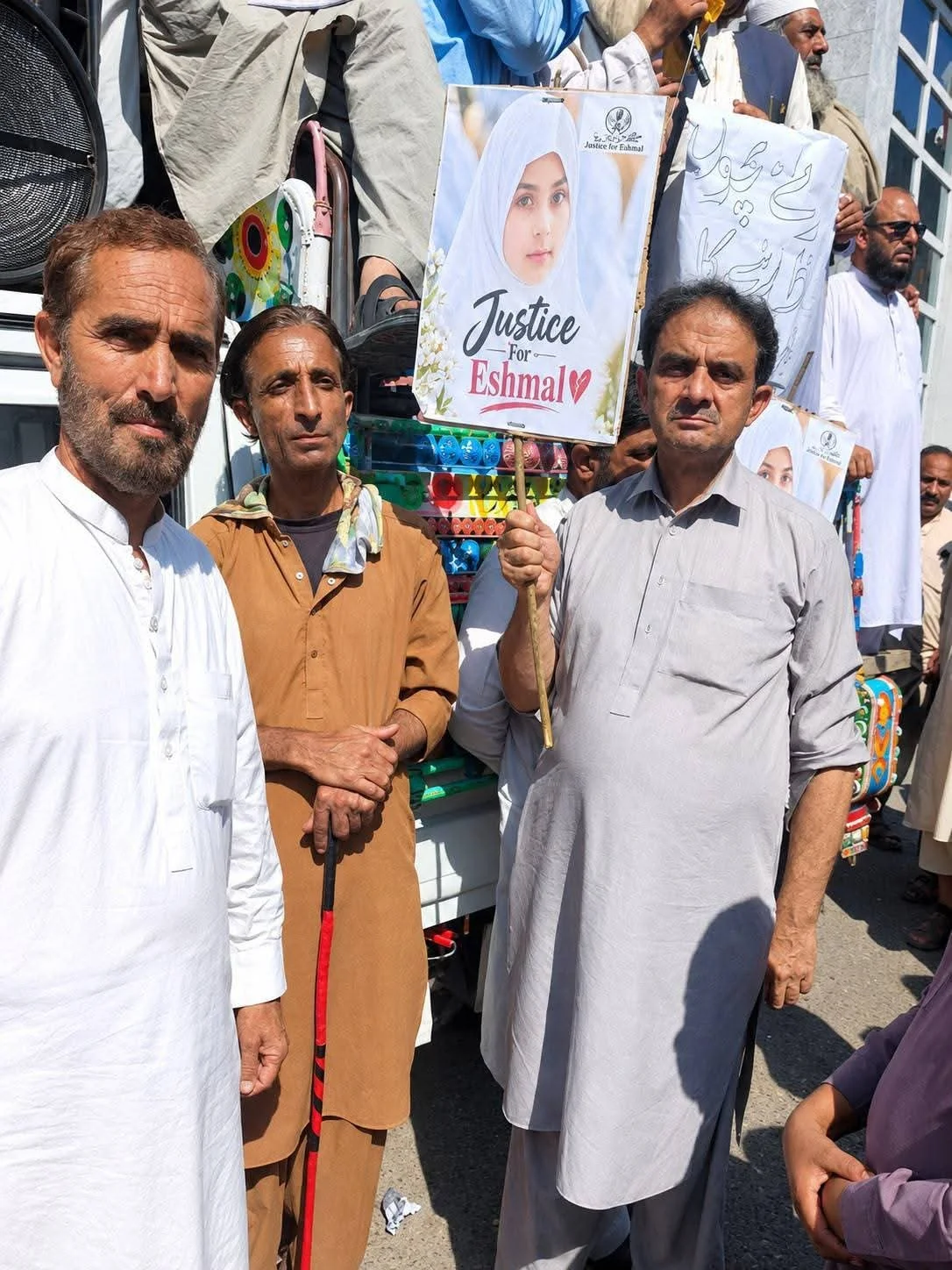
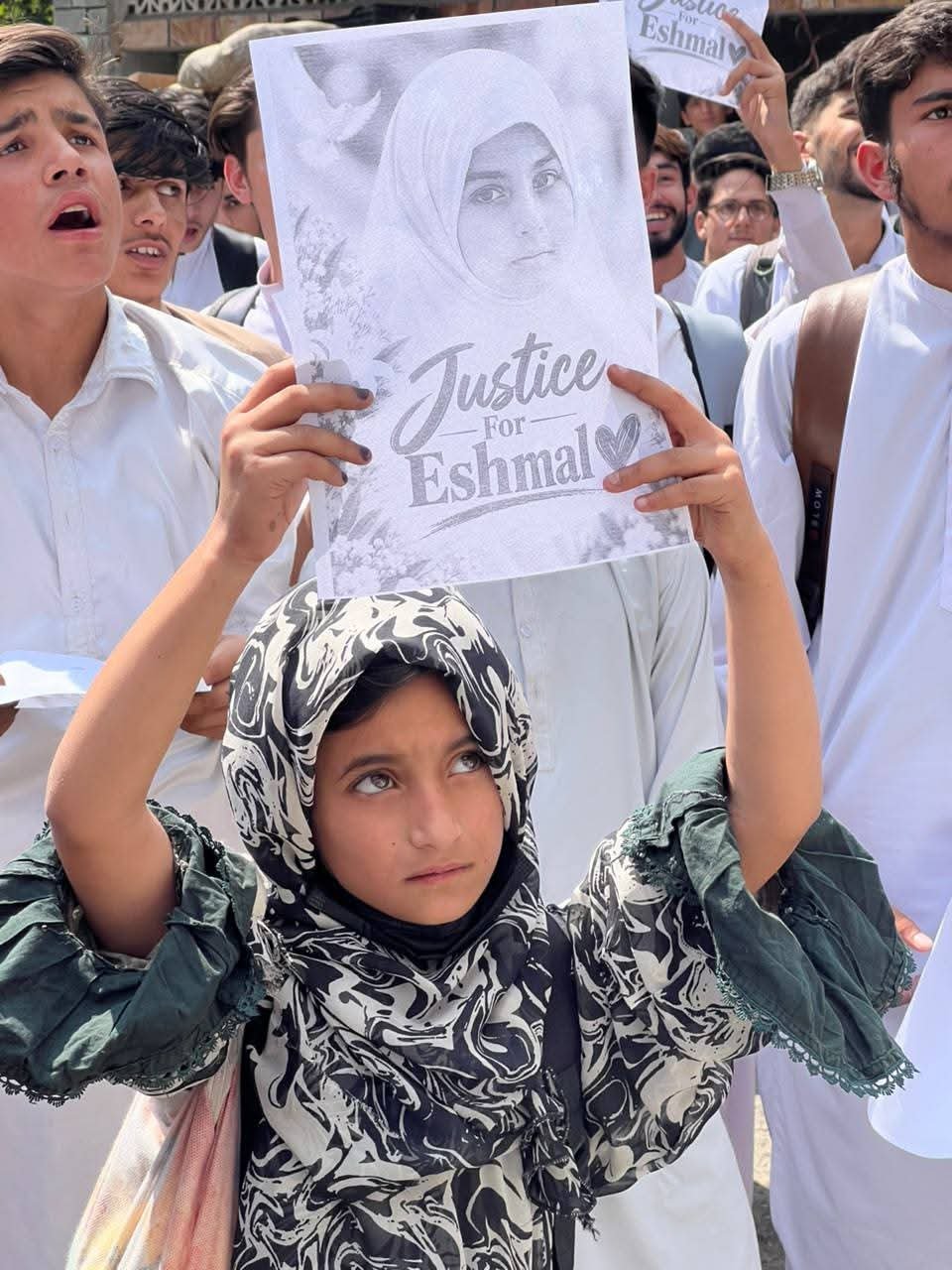
Photos: Shahzad Naveed for More to Her Story
For Eshmal’s 19-year-old sister, Asma, the concern is not only whether the accused will face trial, but whether the case will result in punishment. She told More to Her Story that she has little confidence in the police and courts, citing cases in which suspects accused of similar crimes have remained in legal proceedings for years.
Upper Swat District Police Officer Mushtaq Khan told More to Her Story that a joint investigation team had been formed to investigate the case, alongside a separate committee of prosecutors under the district public prosecutor. He said police hoped to move the investigation and prosecution forward within 14 days and would continue pursuing the case through the courts.
Sultan Muhammad worked as a watchman for the Forest Department in Upper Swat. Pir Musavir Khan Ghazi, an adviser to Khyber Pakhtunkhwa’s Forest Department, confirmed that Muhammad had been suspended from his position and said the department would also pursue disciplinary action against him.
Eshmal’s family is also receiving legal representation.
The case has brought renewed attention to the wider problem of violence against women and girls in Pakistan. The World Economic Forum’s 2025 Global Gender Gap Report ranked Pakistan last among the 148 countries assessed.
Erfaan Hussein Babak, executive director of The Awakening, told More to Her Story that cases of child sexual abuse continue to be reported across the country. Babak said more than 17,000 cases of child sexual abuse were reported across Pakistan in 2025, including 12,800 in Punjab, 3,187 in Sindh, 855 in Khyber Pakhtunkhwa and 431 in Islamabad. Girls accounted for roughly 65 percent of reported cases and boys 35 percent, while 2,378 cases involved children under the age of 10.
Babak said Khyber Pakhtunkhwa already has laws intended to protect children but that the problem lies in weak enforcement.
“The responsibility does not rest only with the government,” Babak said. He called for families, communities and institutions to play their roles in preventing abuse and protecting children.
For residents of Swat Valley, Eshmal’s story is no longer only about what happened inside one house. It has become a question about whether girls can safely walk to school, play at a neighbor’s home or move through their own communities without fear.
For the women who have joined the protests, her death has sparked a rare moment of public mobilization against violence toward women and girls.
For Eshmal’s family, the demand is straightforward: accountability.